Elie Beach, Fife
Perfect Walks

The Fife Coastal Path - Lower Largo to St Andrews

Distance: 51kms/32 miles
Height Gain: 150 metres/492 feet
Approx Time: 3 days
OS Map: Explorer 371: St Andrews & East Fife
Google Map

Itinerary Details

Fife Coastal Path - Lower Largo to Pittenweem - 12 miles:

This 3-day route starts in the conservation village of Lower Largo, which has a long association with fishing and is the birthplace of Alexander Selkirk, the inspiration for Daniel Defoe's Robinson Crusoe. There's a monument to Robinson Crusoe in the village.

To get to Lower Largo, take the Fife Stagecoach 95 bus service from Leven Bus station. The Stagecoach St Andrews to Edinburgh X58 and X60 bus service runs regularly to Leven and St Andrews, though only to Upper Largo, not Lower Largo.  

From the Temple car park in Lower Largo, the route follows the abandoned railway and coastline east to Dumbarnie wildlife reserve, calcareous dunes noted for birds, butterflies and flowers. The high tide route passes through the reserve. The low tide route follows the beach, and the routes converge at the Cocklemill Burn bridge and on to Shell Bay Caravan Park. The path climbs from Shell Bay to Kincraig Point.

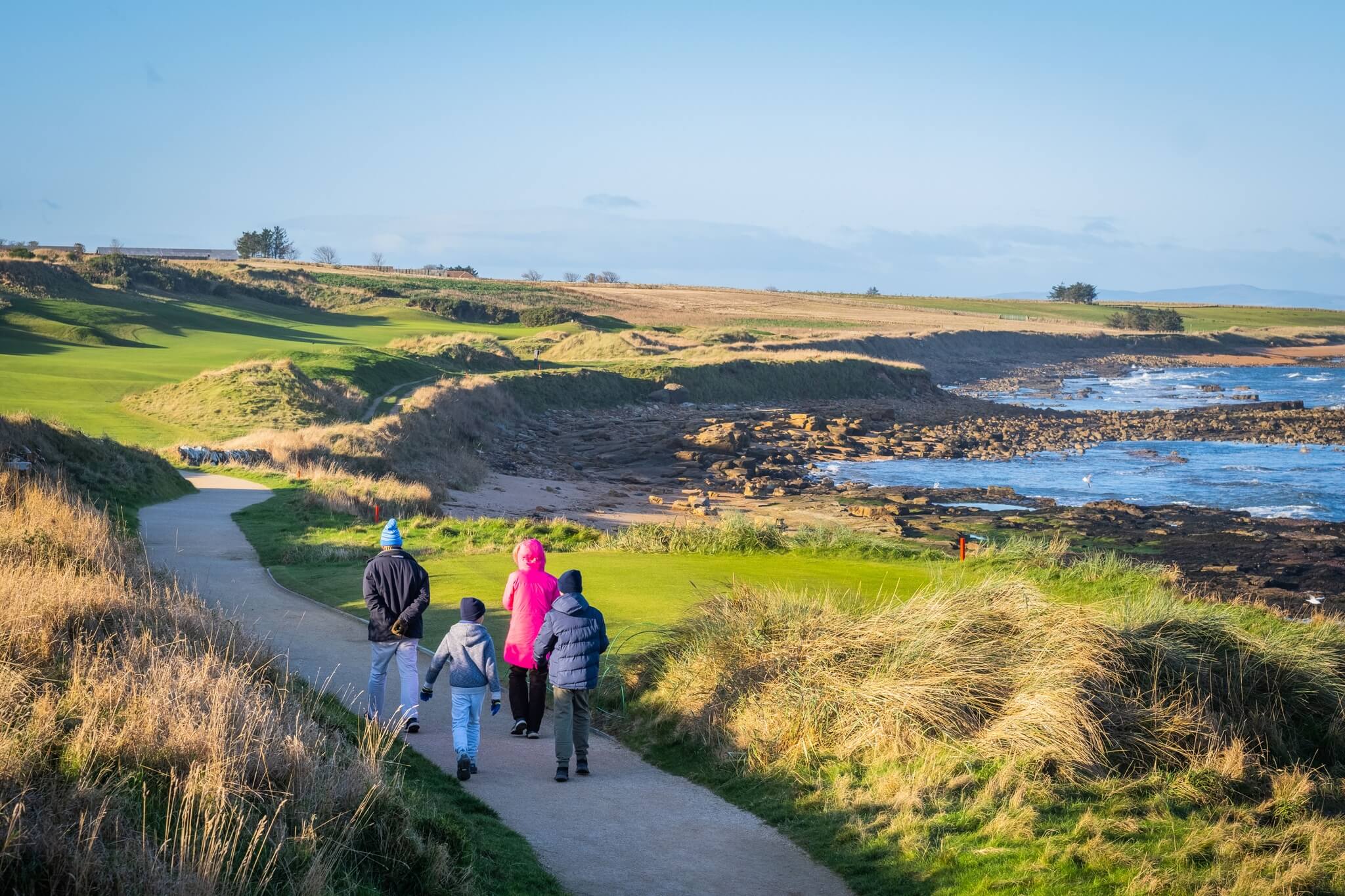
The path crosses the golf course (please access responsibly and be mindful of golf balls) and skirts Chapel Green, named for an 11th Century chapel used by pilgrims travelling to St Andrews. The path then reaches Elie with its renowned Blue Flag beach.

The Elie to St Monans section begins at Ruby Bay Car Park. The path crosses Shepherd's Knowe and a short detour leads to Elie Lighthouse (1908) and Ladies Tower (c.1760).

Further on are the ruins of Ardross Castle (c.1370) and the 15th century Newark Castle. Nearby is a 16th century doocot. From here to St Monans there is another high tide diversion which borders fields, crosses a bridge and rejoins the low tide route near 14th century St Monans Church. The path passes the restored St. Monans Windmill, once used to pump seawater into the adjacent salt pans, and fossil rich limestone beds. Carry on for a further mile to reach Pittenweem.

For a detailed map of this section of the Fife Coastal Path, visit the Fife Coastal Path website.

Attractions

Fife Coastal Path - Pittenweem to Fife Ness - 8 miles:

The second day starts at Pittenweem, which is Fife's only fishing harbour, and site of a cave used by St Fillan in the 7th century.

Heading off from Pittenweem the path borders the Anstruther Golf Course, and along the rocky shore past Billow Ness to the four old royal burghs which constitute Anstruther. This popular tourist village is noted for the Scottish Fisheries Museum and the Reaper, a herring drifter built in 1900. In the summer there are boat trips to see the thousands of birds on the Isle of May - a National Nature Reserve managed by Scottish Natural Heritage.

The route continues through the narrow streets of Cellardyke, passing its picturesque harbour north eastward towards Crail. At first, the route follows a track then narrows, passing through kissing gates and stone stiles onto open pasture. Take care here as livestock may be present in these areas. The Caiplie Caves are a prominent weathered sandstone feature situated almost halfway between Cellardyke and Crail. The route continues past an old salmon bothy and salt works before winding its way via some stone steps to the traditional and pretty fishing village of Crail with its 17th century harbour.

The section from Crail to Fife Ness is challenging in places. The route passes a 16th century doocot and rounds Roome Harbour at the north eastern edge of the village. This is attractive beach is very popular with visitors. The path continues through Sauchope Caravan Park before emerging onto a narrower and rougher section of path to the Kilminning Coast Wildlife Reserve. The reserve is managed by the Scottish Wildlife Trust and livestock graze here at certain times of year. The route crosses the reserve and onto Fife Ness, the most easterly point in Fife.

For a detailed map of this section of the Fife Coastal Path, visit the Fife Coastal Path website.

Attractions

Fife Coastal Path - Crail to St Andrews - 12 miles:

Day three starts from Fife Ness (most likely after an overnight in Crail) where the path passes the coastguard station, a World War II gun emplacement and bird hide and then joins a narrow road, past caravans and the remains of a harbour.

A sandy, narrow path follows the boundary Balcomie links golf course, the seventh oldest in the world, and passes Constantine's Cave where the king was killed c 874. Beyond the golf course the route continues along the shore beneath the Randerston Cliffs. Walkers should wait for low tide before attempting this section. The path leads to a bridge over Cambo Burn then continues along a sandy track through the dunes. The section of path from Kingsbarns to Boarhills is rough and may be muddy in winter. The track borders the renowned Kingsbarns Golf Links, crosses a stone wall and onto a much narrower path.

From here the route hugs the coastal slope between rocky shore and farmland and descends to the beach and continues to Babbet Ness. The path then heads via farm tracks to Boarhills, skirting the edge of the village before heading back down to the coast.

The section from Boarhills to St Andrews may be the roughest section of the whole route and should be walked at low tide. After Buddo Ness the route passes by 5-star Fairmont St Andrews with its two golf courses (it's well worth an extra evening stop over here if you're looking for a comfortable reward for your exertions). The path leaves the beach and climbs a flight of steps to Kinkell Ness, passing the latest St Andrews golf course, The Castle, and leads on to Kinkell Braes Caravan Park then descends into St Andrews.

St Andrews is full of both historical and cultural heritage and there are many things to see and do here. There's also another award-winning Blue Flag beach at West Sands.

For a detailed map of this section of the Fife Coastal Path, visit the Fife Coastal Path website.

Attractions


walk shetland
Walk the Southern Upland Way from Peebles to Portpatrick with McMillan Hotels
Find out more about Ormidale House
Craigdon Mountain Sports